
Your past may have shaped your patterns. It doesn't have to keep deciding what happens next.
Your StoryGrowing up around alcoholism can shape far more than your childhood.
It can influence how you respond to stress, relationships, conflict and uncertainty. It can shape the boundaries you set, the responsibility you carry, the way you relate to other people and the way you relate to yourself.
Many of these patterns developed for a reason. They helped you adapt to an environment that may have felt unpredictable, emotionally overwhelming or unsafe.
But the responses that once helped you cope can sometimes become the very patterns that limit you later in life.
Understanding what shaped you is important. Developing the capacity to respond differently is what creates change.

From automatic response to intentional choice
At AEQUUS, the work is not about blaming your childhood for everything that happens in your adult life.
Nor is it about trying to erase your past.
It's about understanding how your experiences may have shaped the way you learned to respond to the world, and developing greater capacity to choose how you want to respond now.
Because there is a difference between understanding a pattern and having enough internal capacity to interrupt it.
This is where nervous system regulation and self-leadership become an important part of the conversation.
The goal isn't to never become triggered, overwhelmed or activated.
It's to become increasingly able to recognise what is happening within you, support yourself through it and reconnect with your ability to choose what happens next
You might recognise yourself here
Constantly anticipating what could go wrong
Feeling responsible for other people's emotions
Struggling to set boundaries without guilt
Over-functioning or taking responsibility for everything
Finding it difficult to ask for or accept help
People-pleasing to avoid conflict or rejection
Growing up around alcoholism looks different for everyone. There isn't one way an adult child of an alcoholic thinks, feels or behaves.
But you may recognise experiences such as:
Becoming overwhelmed, defensive, withdrawn or shut down during conflict
Finding uncertainty particularly difficult
Knowing what you want to do differently but struggling to access that response in the moment
Feeling highly capable in some areas of your life while certain situations seem to bring out a completely different version of you
These responses are not your identity.
They are patterns. And when we can understand the pattern, work with the response underneath it and strengthen our capacity for self-leadership, we create more room for choice.
Explore the work
-

Understand
Explore articles and resources about growing up around alcoholism, survival responses, nervous system regulation, behaviour and self-leadership.
-

Go Deeper
A self-paced programme for adult children of alcoholics exploring how the experiences you grew up with may still be influencing the way you think, feel and respond today, and how you can begin creating a different relationship with yourself and your future.
-

For Practitioners
A white paper for counsellors, psychotherapists, coaches and other practitioners working with adult children of alcoholics and adults who grew up in unpredictable environments.
It explores why insight into childhood patterns does not always translate into behavioural change and considers the role of nervous system regulation and self-leadership in bridging the space between understanding and action.

Why this work matters to me
My interest in this work is both professional and personal.
I grew up as the child of an alcoholic.
For a long time, I thought I was broken, but over time I started to recognise many of the patterns that being the child of an alcoholic had created in my life. But one of the most important things I came to understand was that knowing why I behaved a certain way didn't necessarily mean I could access a different response when I was overwhelmed or triggered.
That question ultimately led me deeper into the relationship between our experiences, nervous system, behaviour and capacity for self-leadership.
Today, as a qualified trauma-informed Mindbody Practitioner, that understanding forms an important part of my work through AEQUUS.
I don't believe our past needs to be erased, minimised or used to explain away everything that happens in our lives.
I believe we can understand what shaped us without allowing it to automatically decide who we become.
Explore more on YouTube
On my YouTube channel, I explore the patterns that can develop from growing up around alcoholism and how they can continue to influence the way we think, feel and respond as adults.
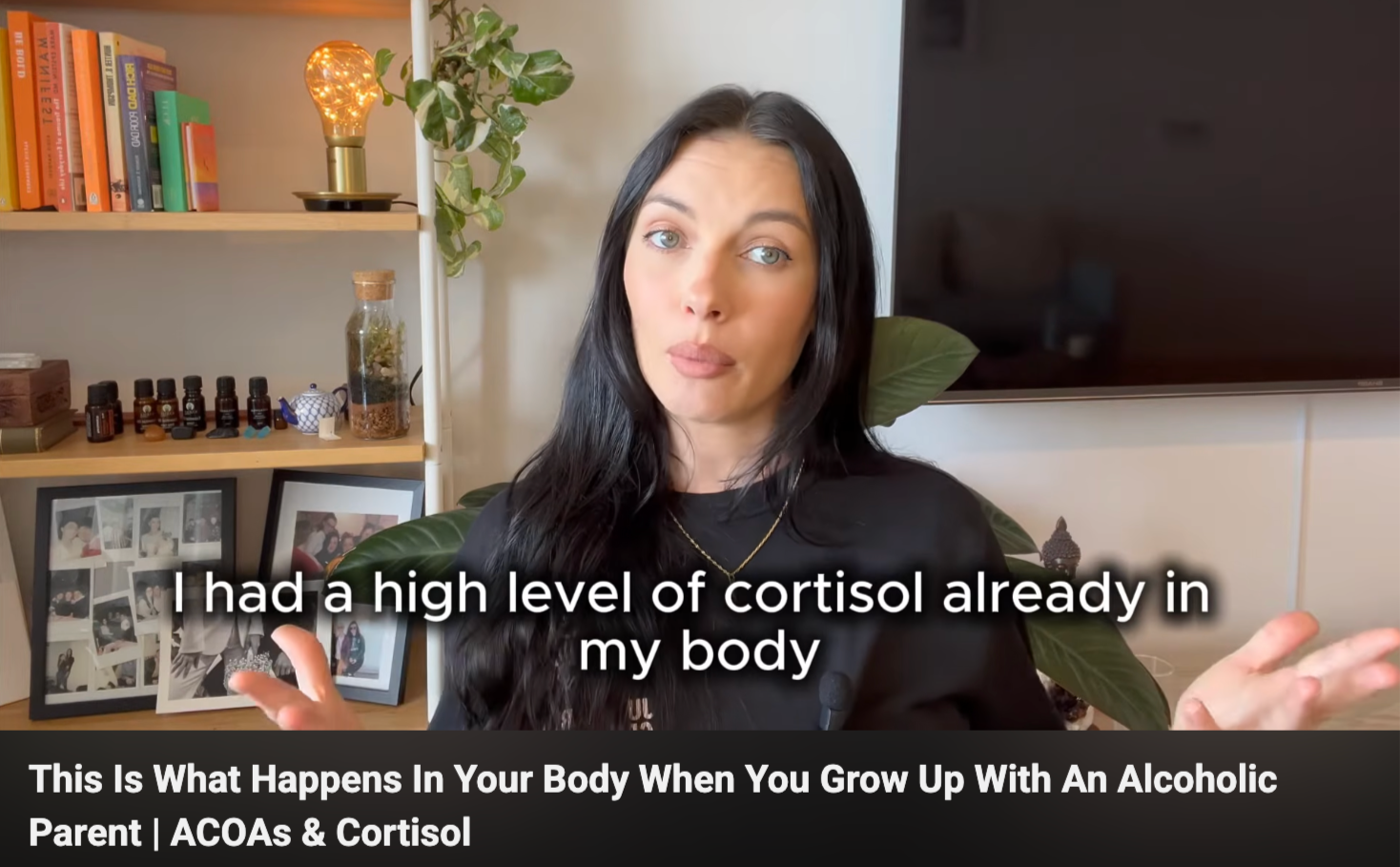
Through conversations about survival responses, nervous system regulation and self-leadership, my aim is to help you better understand what shaped you and develop greater capacity to choose what happens next.